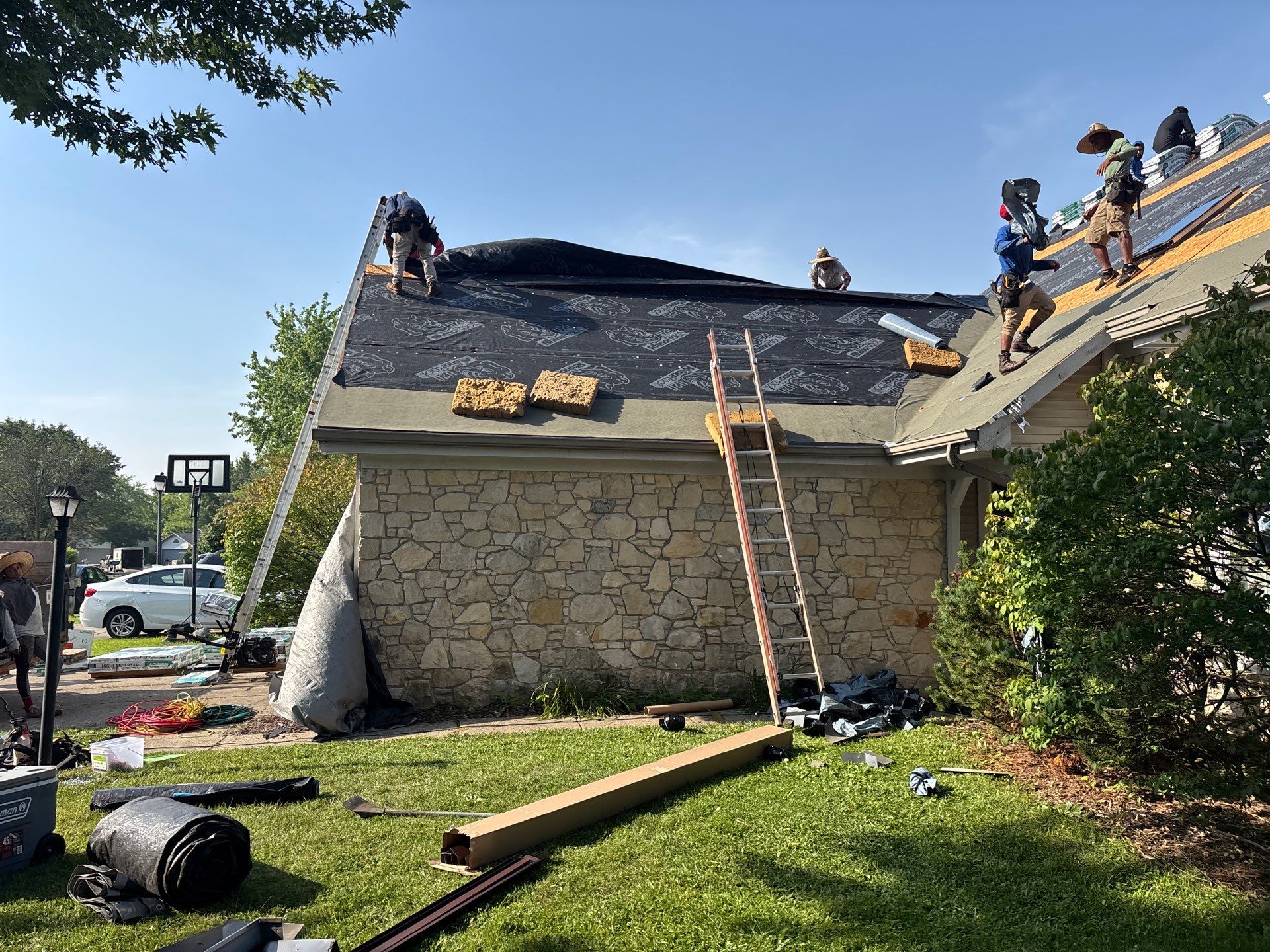
What does a roof replacement cost break down into?
It breaks into materials, labor, tear-off and disposal, contingent decking repair, the permit, ventilation and accessories, and the contractor's overhead and profit. Labor and materials take the large majority of the total, with the rest divided among the other items. Some costs are fixed once the scope is set, while decking is contingent on what the crew finds. For a Yeoman homeowner, an itemized quote shows the specific split for your roof, turning the total into a clear breakdown of where the money goes.
What is the biggest part of a roofing quote?
Labor and materials are the two largest parts, together making up the large majority of the cost, with labor often the single largest component. Labor covers the skilled work of tear-off, installation, detail work, and cleanup, while materials cover the full roofing system. The rest, tear-off disposal, permits, ventilation, and overhead, makes up smaller shares. For a Yeoman homeowner, knowing that most of the cost is labor and materials gives a realistic sense of where the money concentrates in a roof replacement quote.
How much does decking repair add?
It depends on how much decking is damaged, which often cannot be known until the old roof is removed, and it is typically priced per sheet. Replacing a few sheets adds a modest amount, while widespread rot adds more. A reputable contractor notes the possibility in the quote and shows you the damaged wood before replacing it. For a Yeoman homeowner, decking is the most common contingent cost and the line item most likely to differ from the base quote, so budgeting a buffer for it is wise, even though many roofs need little or none.
How much of the cost is labor?
Labor is often the single largest component of a roofing quote, frequently a substantial share of the total, reflecting the skilled, physical work a roof requires. The exact proportion varies with the roof's complexity and pitch, since steeper and more intricate roofs take more labor. Quality labor is what makes a roof last, so it is a major and worthwhile cost. For a Yeoman homeowner, a large labor share is normal rather than a red flag, and comparing it across itemized quotes confirms whether it is in range for your roof.
Can I remove items to lower the price?
Some choices lower the cost, but necessary work should not be removed. The biggest lever is the material, since a quality architectural asphalt costs far less than premium materials. What you should not cut is tear-off, proper decking repair, underlayment, flashing, or experienced labor, since those determine whether the roof lasts. For a Yeoman homeowner, lowering the price wisely means choosing a more affordable material or comparing competitive quotes, not stripping out the components that make the roof sound, which would lead to a roof that fails early and costs more.
What is the overhead and profit line?
It is the portion covering the contractor's business costs and margin, including insurance, licensing, equipment, vehicles, office costs, and the warranty they stand behind, plus the profit that keeps the business operating. This is normal and necessary, and a contractor with no overhead may lack proper insurance or a real warranty, which is a risk. For a Yeoman homeowner, the overhead and profit line reflects hiring an insured, accountable roofer who will stand behind the work, which is part of the value of a reputable contractor rather than an extra charge.
Are permits included in the quote?
They should be. Most roof replacements require a permit, which the contractor typically pulls and includes in the price, and some areas require a final inspection to close it out. This portion is usually modest compared to materials and labor. Skipping the permit can cause problems later, especially at sale. For a Yeoman homeowner, confirming that the permit is included is worth doing, since a reputable contractor handles it properly rather than cutting this corner, and an itemized quote will show the permit as its own line.
Why should I ask for an itemized quote?
Because it shows exactly what you are paying for and lets you compare contractors fairly. An itemized quote separates materials, labor, tear-off, decking provisions, permits, ventilation, and overhead, revealing the scope and exposing anything missing or out of line. A single lump sum hides all of this and makes comparison guesswork. For a Yeoman homeowner, an itemized quote is the best tool for understanding the cost and ensuring each contractor is pricing the same scope, which protects you from a low number that reflects an incomplete job.
Why is tear-off a separate cost?
Because removing the old roof is real work and produces waste that must be disposed of. Tear-off covers the labor to strip the existing roofing and the dumpster and fees to haul it away, and more old layers mean more labor and debris. It is sometimes listed separately and sometimes folded into the labor line, but it is always part of the total. For a Yeoman homeowner, the tear-off cost reflects the necessary step of clearing the old roof before the new one can be installed properly.
What costs are fixed vs contingent?
Most of the quote, materials, labor, tear-off, permit, and overhead, is fixed once the scope is set and does not change based on what the crew finds. Decking repair is the main contingent cost, since its extent is often unknown until the old roof is removed, and other unforeseen conditions can occasionally add cost. For a Yeoman homeowner, knowing which costs are fixed and which are contingent explains why a total can change after work begins, and why budgeting a buffer for decking, the usual variable, is the prudent step.
What materials are included in the price?
Far more than the shingles. The materials cost includes the roofing material itself plus underlayment, ice-and-water protection in vulnerable areas, flashing for chimneys and valleys, drip edge along the eaves, ventilation components, fasteners, and ridge caps. All of these are needed for a complete, watertight roof. For a Yeoman homeowner, confirming that the full materials system is included, not just the surface material, ensures you are comparing complete roofs between contractors and that nothing essential is omitted to lower a price.
How do I get an itemized breakdown for my roof?
Request a measured, itemized estimate, where a contractor assesses your roof and provides a quote listing each component separately. This shows exactly where your money goes and lets you compare bids on equal footing. Most contractors provide it without obligation. For a Yeoman homeowner, an itemized estimate is the only way to see your real breakdown rather than general proportions, since it reflects your specific roof's size, material, complexity, and condition, and it is the figure you can actually budget and compare against other quotes. Once you have two or three of them side by side, the breakdown does the comparing for you, since the differences in material grade, scope, and warranty become obvious line by line, and you can ask each contractor about any gap before you decide.